
BNF, RTF, PNP and prebuilt FPV labels describe delivery states, not a universal box list. Compare receiver, setup and acceptance responsibility for the exact model.
BNF, RTF, PNP, and “prebuilt” describe delivery states, but they are not universal promises about every item in the box. This guide focuses on how those labels change receiver, setup and acceptance responsibilities. Treat the label as a starting point and verify the receiver, radio, goggles, batteries, charger, firmware, binding, and final setup for the exact model and seller listing.
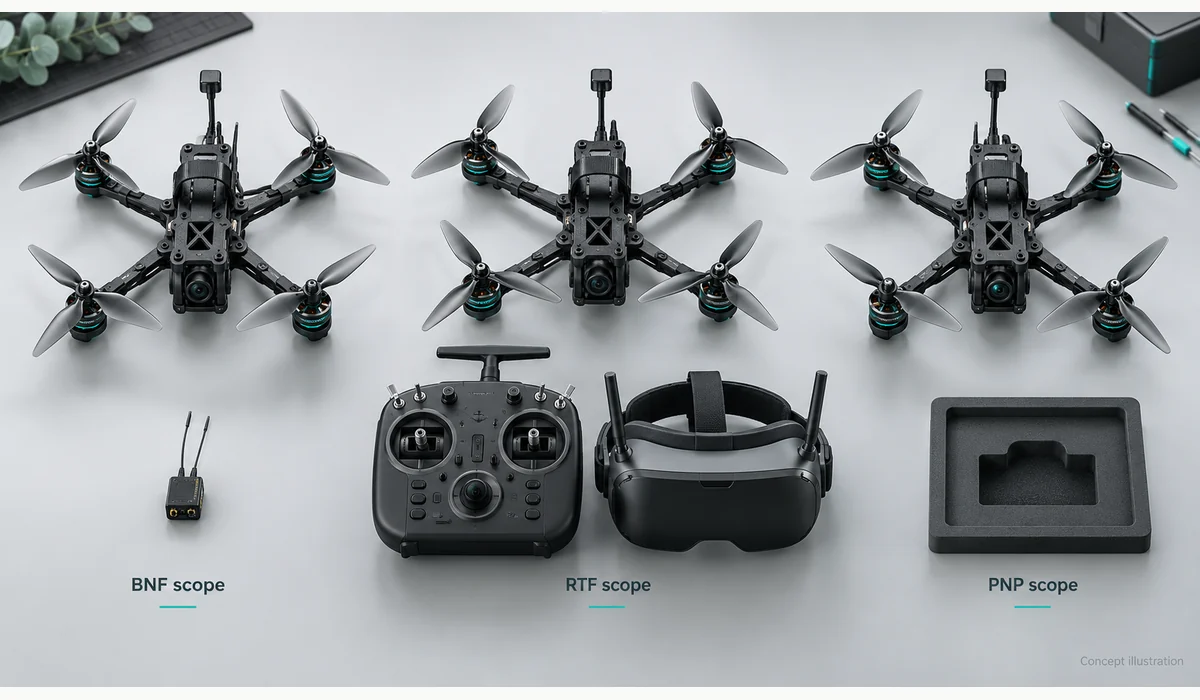
A BNF FPV drone is commonly sold with a receiver for binding to a compatible transmitter. A ready-to-fly FPV drone usually signals a more complete path to first use, while PNP often leaves the receiver or other system choices to the buyer. “Prebuilt” only says that substantial assembly has been done. Manufacturer catalogs, including EMAX’s current BNF/RTF/PNP grouping, demonstrate real market usage, but the package list for a specific model remains controlling.
Start with the transmitter and module, receiver ecosystem and frequency family, goggles and video system, battery connectors and cell family, charger capabilities, and computer or mobile tools needed for setup. A BNF model that matches the receiver brand may still need a compatible frequency, firmware, binding phrase or procedure, channel mapping, and failsafe verification. Video compatibility is a separate decision from control-link compatibility; use the ELRS compatibility checklist when that control system is under consideration.
For one pilot, ready may mean bound, configured, charged, and accompanied by spares. For a school or fleet, it may also mean unique aircraft IDs, matching radio profiles, standard switch assignments, configuration backups, battery labels, instructor documentation, and an acceptance record. State who performs every step. A ready-to-fly FPV drone label is not evidence that the organization’s own safety and training checks are complete.
Match the box against the seller’s current contents list, not a generic category description. Identify the aircraft revision, receiver, video transmitter, antennas, propellers, loose hardware, cables, manuals, and any ground equipment. Then perform non-flight setup and safety checks before controlled flight evaluation. If any supplied part differs from the approved description, stop and resolve the deviation before copying settings to more aircraft.
| Review area | Evidence or decision to record |
|---|---|
| BNF FPV drone | Receiver type, binding and buyer-owned radio/video gear |
| RTF FPV drone | Exact radio, goggles, power items and setup state |
| PNP quadcopter | Missing receiver or other selectable systems |
| Prebuilt FPV drone | Remaining installation, configuration and verification work |
Fill this comparison with the exact seller listing and your existing equipment. The useful answer is not which acronym sounds most complete, but which option leaves the fewest unresolved control, video, power, setup, and handover tasks for this buyer.
A buyer already owns a radio and analog goggles. A BNF listing is only useful if the installed receiver works with the buyer’s transmitter module and the aircraft’s video system works with those goggles. An RTF FPV drone package could duplicate the radio yet still omit batteries or a compatible charger. A PNP quadcopter might reduce duplication but add receiver installation and setup work. The correct choice comes from the buyer-owned equipment matrix, not the label.
For a fleet, add another question: must every radio bind to every aircraft, or will each pair remain assigned? That decision affects profiles, labeling, instructor handover, spares, and the acceptance procedure.
If you need an item-by-item review of aircraft, radio, goggles, batteries, charger and spares, use the Cinewhoop kit checklist. For an actual open-propeller package comparison, review the available configurations in DroneNook’s 5–18 inch FPV drone series, then confirm the receiver, video system and included equipment for the quoted model.
DroneNook does not treat a BNF, RTF, PNP, or prebuilt label as proof of package contents or compatibility. Share the exact model, listing, and equipment you want to reuse through the DroneNook contact form for a scope check.