
Choose 5-inch freestyle props using exact hub and shaft fit, rotation and packing requirements, motor and ESC load evidence, sample comparisons and a clear replacement record.
To choose 5-inch freestyle props, start with the exact aircraft, motor, shaft and approved operating configuration. Then compare the propeller’s dimensions, rotation, load evidence and supplied quantities. A useful shortlist comes from documented fit and a controlled sample comparison, rather than a universal “best prop” ranking.
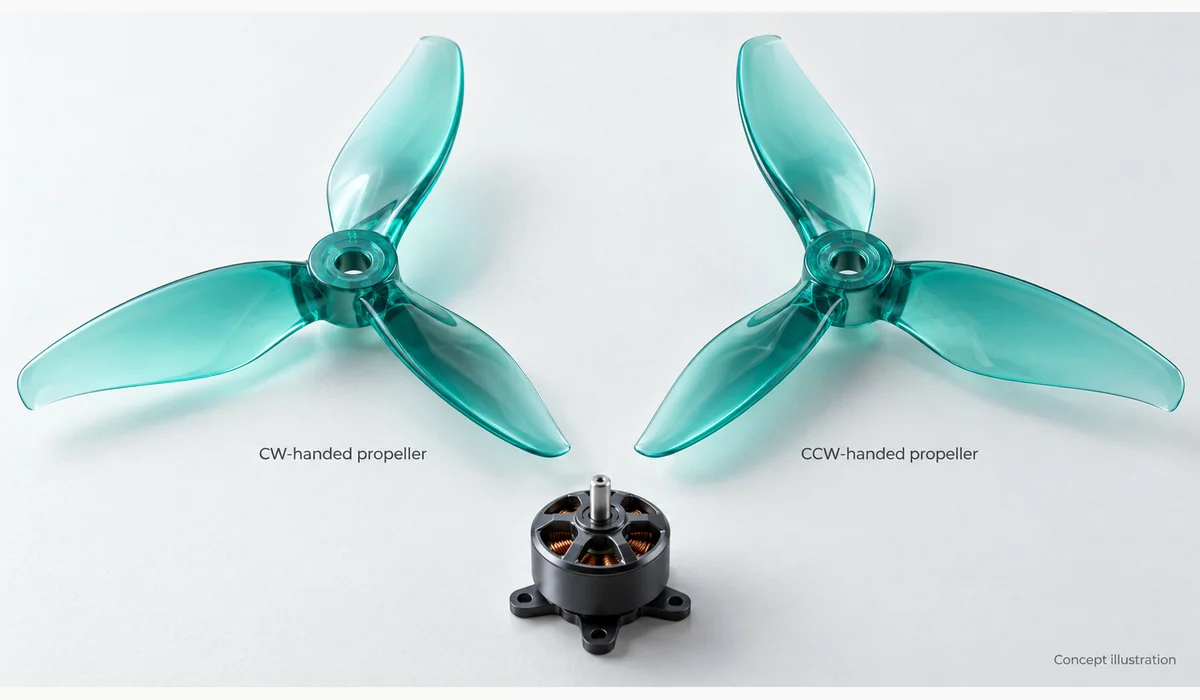
FPV propeller hub and shaft fit requires more than a matching bore. Record the manufacturer and exact model, overall diameter, pitch designation, blade count, hub bore, hub thickness and intended retaining hardware. Check the motor’s usable shaft and thread, attachment instructions, and clearance to the frame or guards.
Ask for the current drawing or a dimensioned sample when a critical dimension is missing. A model name or a nominal size category is a reference for the enquiry; the measured geometry and manufacturer’s application guidance establish the configuration to review.
The HQProp 5×4.3×3 V2S specification provides an example of the fields to collect. Its linked listing identifies the following model-specific data:
| Field | HQProp example |
|---|---|
| Diameter / pitch / blades | 5 inches / 4.3 / 3 |
| Shaft / hub thickness | 5 mm / 6.5 mm |
| Listed pack contents | 2 CW propellers and 2 CCW propellers |
These values describe that linked model. DroneNook’s PC three-blade propeller series lists separate 5129 and 5146 reference configurations, with overall diameter requiring confirmation. Request the relevant drawing, rotation and packing specification for a quotation; a similar product code does not establish equivalent geometry.
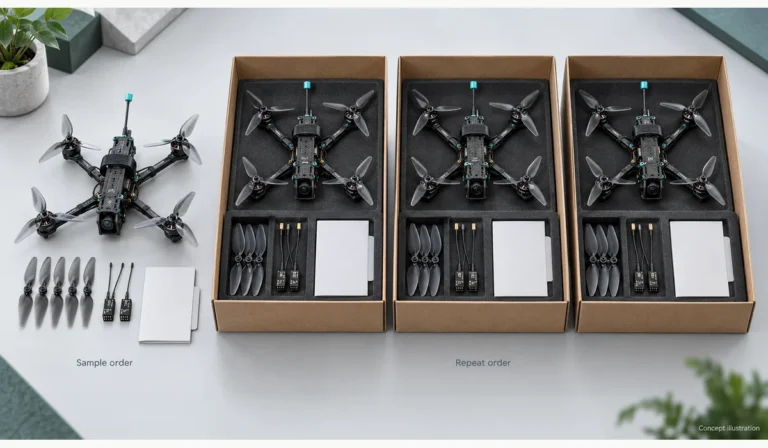
For FPV propeller rotation and pack contents, specify the required CW and CCW versions using the supplier’s stated convention. Match each version to the intended installation, then state whether the requested quantity means individual propellers, matched sets or packs. Confirm how each pack is labelled.
As an illustrative order calculation, ten packs defined as two CW and two CCW propellers contain forty individual propellers: twenty of each rotation. Write both the pack definition and total quantities into the quotation. Other packing arrangements need their own breakdown.
Motor and ESC load checks belong in the same comparison as physical fit. Identify the motor model, battery configuration, propeller model and intended aircraft mass. Review the maker’s relevant operating guidance and test conditions; a pitch number alone does not establish acceptable current, temperature or handling.
Use the FPV ESC selection guide to organise rating conditions, cooling, installation and replacement records. Keep any unresolved motor or propeller limitation visible in the sample-review plan instead of assuming the ESC label approves the combination.
Keep the aircraft, motors, tune, battery condition, takeoff mass, pilot, manoeuvre sequence and environment as consistent as practical. Record the exact propeller reference for every run, along with available current or energy logs, motor and ESC observations, vibration or video effects, damage and pilot comments.
Follow the component and aircraft maker’s installation and test guidance. Stop and investigate unusual vibration, noise, heat or control behaviour. The sample-request and acceptance guide helps separate the evidence needed from the supplier from checks performed on your own platform.
Freestyle propeller replacement planning should use the approved model, rotation mix and packing reference. Treat colour as a secondary identifier. Define the inspection and discard criteria for cracks, deformation, damaged hubs or uncertain history, following the applicable manufacturer’s guidance.
Ask what changed in geometry, material description, hub construction or supplied contents. Review the proposed substitute against the approved configuration before treating it as equivalent. Keep the supplier’s revision or change reference with the receiving record so later orders can be traced.
| Review area | Record before the order |
|---|---|
| Identity and fit | Exact model, drawing reference, diameter, bore, hub thickness and hardware |
| Operating scope | Aircraft, motor, battery and relevant maker guidance |
| Comparison evidence | Sample identity, controlled conditions, observations and open issues |
| Quantity unit | CW/CCW quantities, individual pieces, packs and contents per pack |
| Repeat supply | Approved model, changes requiring review, labels and packing reference |
To choose 5-inch freestyle props for repeat supply, send the current propeller reference, motor and shaft details, clearance requirements, rotation quantities and destination through the DroneNook contact form. Sample availability, MOQ, pricing, timing and the final supplied configuration are confirmed for the proposed order.