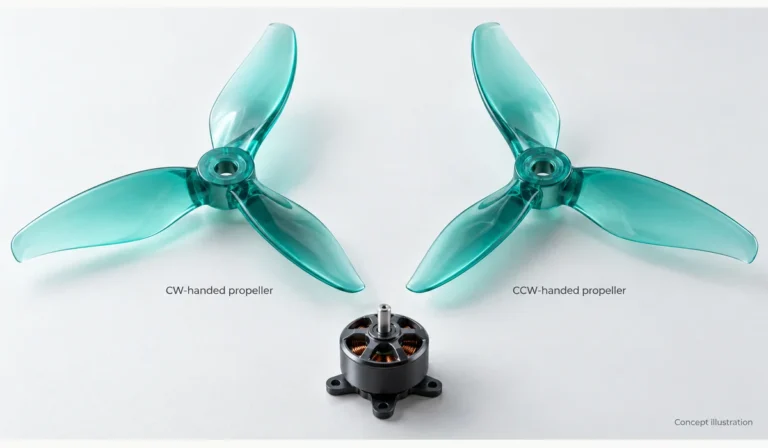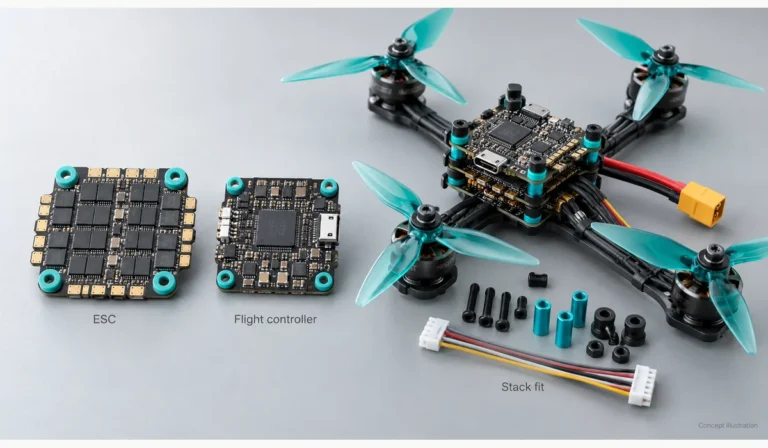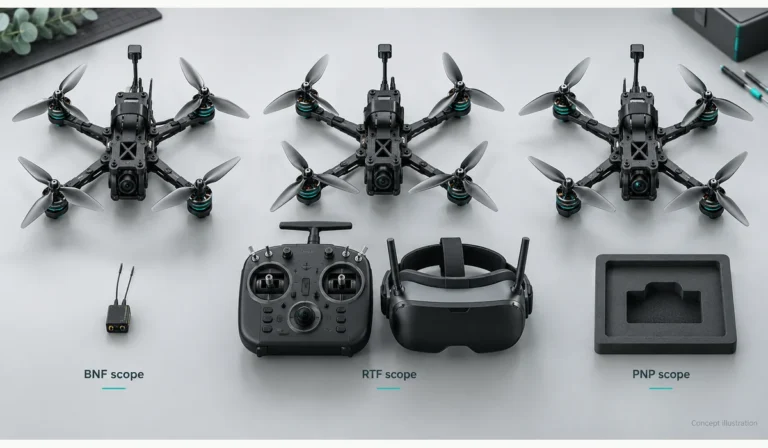

A line-item kit checklist for defining what a prebuilt or RTF cinewhoop package must include and demonstrate.
A cinewhoop drone kit should be judged by a line-item package list and an acceptance plan, not by the words “kit,” “RTF,” or “prebuilt.” For a business buyer, the decisive question is whether the delivered aircraft, recording setup, live-view system, control system, power equipment, spares, documentation, and trial responsibility together create a usable handover.
A usable kit closes five chains: control (radio to receiver), pilot video (camera/VTX to goggles), final recording (recording device to usable file), power (battery to safe charging equipment), and support (spares, configuration record and responsible party). One open chain means the package may arrive assembled yet still not be usable for the intended job.
| Chain | Must be named | Common missing item | Buyer outcome |
|---|---|---|---|
| Control | Radio, receiver protocol/version, binding responsibility | Compatible radio or receiver configuration | Hold until the complete link is confirmed |
| Pilot video | FPV camera, VTX, antennas, goggles/receiver | Goggles or matching receiver | Price the missing ecosystem, not only the aircraft |
| Final recording | Device, mount, storage and file settings | Action camera, card or mount | Do not treat live-view recording as the required master file |
| Power | Battery, connector, charger and input lead | Charger or region-appropriate input | List separately before calling the package complete |
| Support | Props/guards, setup file, documentation, discrepancy contact | Configuration record | Require a handover record for repeatability |
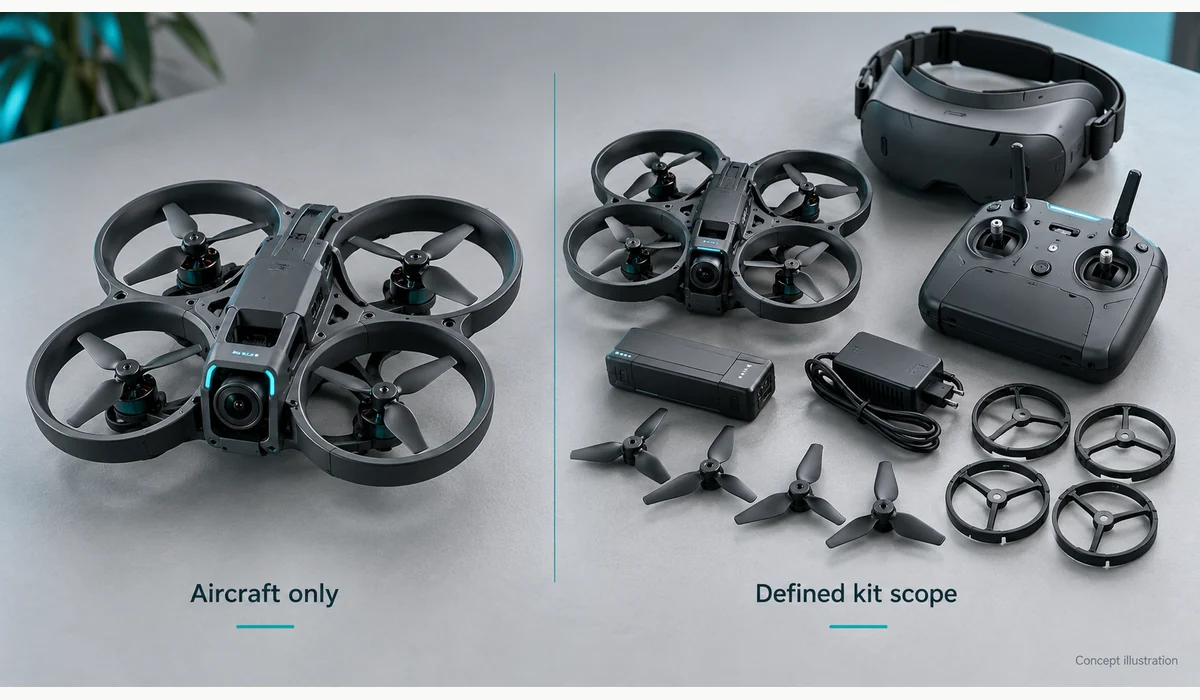
A prebuilt cinewhoop can mean that the aircraft has been assembled. A cinewhoop RTF offer may imply a more complete package, but the abbreviation does not prove that a recording camera, compatible goggles, radio, batteries, charger, or local plug is included. Even two offers from the same supplier can use the label differently.
Read each cinewhoop drone kit quotation as a bill of materials. Each line should identify a manufacturer, model or defining specification, quantity, installed status, and any substitution rule. The DroneNook package-contents guide explains why scope needs to be explicit. If aircraft size is still undecided, use our 2.5 vs 3.5 inch cinewhoop comparison before defining the package. The Cinewhoop FPV Drones reference configurations provide a starting point for an inquiry; included equipment must be confirmed in the quotation.
| Package layer | Questions to answer | Acceptance evidence |
|---|---|---|
| Aircraft | Frame size, motors, flight controller, receiver, video transmitter, antennas? | Photos, configuration record, visual inspection |
| Recording | Camera and mount included? Storage media? Recording settings? | Original sample file and on-unit recording check |
| Live view | Analog or named digital ecosystem? Goggles/receiver included? | Live image on the delivered receiver |
| Control | Radio included? Binding completed? Modes and switches documented? | Manufacturer-specified control checks by the qualified evaluator |
| Power | Battery quantity/specification, connectors, charger, power lead? | Inventory and manufacturer-specified charging review |
| Support | Propellers, guards, screws, tools, manuals, configuration backup? | Counted handover list |
Do not accept “all necessary accessories” as a substitute for these rows. For a cinewhoop kit, a buyer with existing goggles and radios may want aircraft-only supply; another buyer may need a complete cinewhoop RTF kit. Both can be valid if the boundary is recorded.
The supplier may deliver a prebuilt cinewhoop, but several responsibilities remain: installing or configuring the recording camera, binding the receiver, setting radio switches, matching the goggles, selecting power settings, preparing batteries, and conducting a trial. Assign an owner to every task.
For a multi-aircraft purchase, record whether each aircraft must be bound to a particular radio, whether one radio will manage several models, and whether configuration files and version information are part of the handover. This is the cinewhoop-specific difference between a box of components and a repeatable operational package.
A prebuilt cinewhoop trial should verify only what the contract requires. It should not be treated as proof of general suitability for every location or operator.
After the supplier fills the block, classify each line as included, buyer supplies, supplier option, or unresolved. “Compatible” is not a contents answer, and a blank line stays unresolved. Do not approve the package until every chain above has an owner.
Copy this into a request:
Quantity: ___. Aircraft size/configuration: ___. Recording camera and mount: included / buyer-supplied / to be proposed. Live-view ecosystem and receiving equipment: ___. Radio protocol and included transmitter: ___. Battery/charger quantities and local power requirement: ___. Required spares: ___. Configuration and test evidence: ___. Delivery and acceptance location: ___.
This block keeps the focus on the imaging and control configuration of the guarded aircraft. It also avoids confusing a cinewhoop kit with an FPV ecosystem purchase where the primary decision is how to reuse goggles and radios across multiple open-prop aircraft.
BETAFPV’s Cetus X FPV Kit lists a transmitter, goggles, four batteries and a battery charger/voltage tester; the flight-controller and receiver configuration depends on the selected version. In contrast, the Pavo35 product page warns that camera and HD digital video-transmission equipment are not included in all packages; check the selected package and any separate-purchase requirement. These manufacturer examples show why the quoted packing list matters; they do not establish what DroneNook includes in a cinewhoop drone kit.
Submit the completed cinewhoop RTF kit scope through the drone parts inquiry checklist or contact DroneNook. The requested configuration can then be reviewed without implying unverified stock or compatibility.